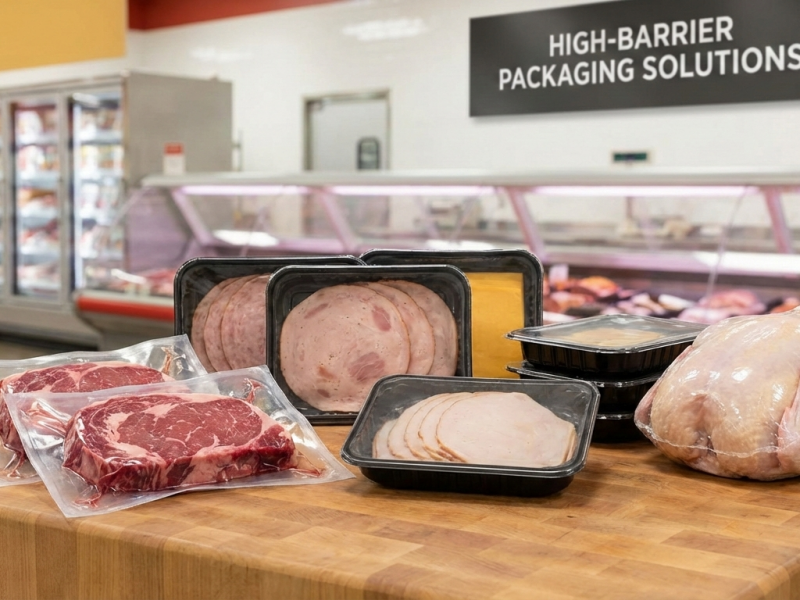
Introduction
In today’s competitive protein market, packaging is no longer just a container — it directly impacts shelf life, food safety, transportation stability, and brand perception.
Choosing the right high-barrier flexible packaging solution can significantly reduce oxygen transmission, moisture loss, and contamination risks while improving product presentation.
This article explains how to select the most suitable packaging structure for fresh, frozen, and processed meat products.
Why Barrier Performance Matters
Protein products are highly sensitive to:
- Oxygen exposure (causes oxidation and discoloration)
- Moisture migration
- Microbial contamination
- Temperature fluctuations during logistics
High-barrier materials such as PA/PE, EVOH, PVDC, or multilayer co-extruded films help maintain freshness and extend shelf life without excessive preservatives.
Comparing Major Packaging Options
1. Vacuum Pouches
Best for:
- Fresh meat
- Processed meats
- Seafood
- Cheese
Advantages:
- Excellent oxygen barrier
- High puncture resistance
- Cost-effective
- Suitable for chamber vacuum machines
Vacuum pouches are ideal when full air removal is required for maximum shelf life.
2. Thermoforming Films
Best for:
- Large-scale automated production lines
- MAP (Modified Atmosphere Packaging)
- High-speed packaging operations
Advantages:
- Customizable bottom web forming depth
- Excellent sealing performance
- Efficient for industrial processing plants
Thermoforming films improve production efficiency and reduce packaging waste in high-volume operations.
3. Shrink Films
Best for:
- Fresh meat display
- Poultry
- Bone-in cuts
Advantages:
- Tight, wrinkle-free appearance
- High clarity for retail presentation
- Superior shrink performance
Shrink films enhance shelf appeal while maintaining strong barrier protection.
Key Factors to Consider When Selecting Materials
- Required shelf life
- Distribution environment (cold chain or ambient)
- Product shape and bone content
- Equipment compatibility
- Regulatory compliance (FDA, EU standards)
Selecting the wrong structure may result in leakage, fogging, poor sealing, or excessive material costs.
Conclusion
There is no universal solution for protein packaging. The right choice depends on product type, processing method, and supply chain conditions.
Working with an experienced high-barrier packaging manufacturer ensures optimized material structure, cost control, and consistent production performance.
If you need help selecting the ideal solution for your application, our technical team is ready to assist.