
Introduction
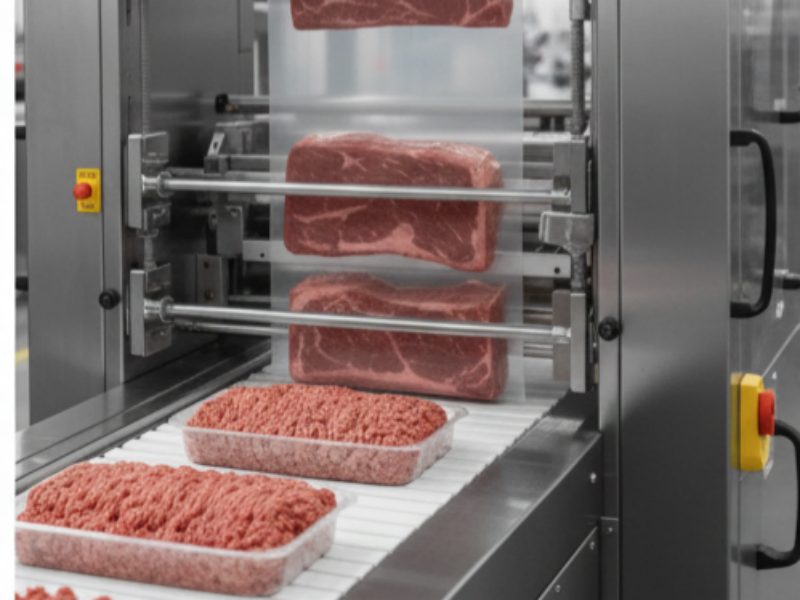
Food manufacturers often face a critical decision: should they use thermoforming film or pre-made vacuum pouches?
Both solutions offer strong barrier protection, but they serve different production needs.
This guide compares the two systems from a technical and operational perspective.
Production Efficiency
Thermoforming Film
- Designed for fully automated packaging lines
- Suitable for high-speed continuous production
- Reduces labor cost
- Ideal for large-scale factories
Vacuum Pouches
- Suitable for small to medium operations
- Flexible and easy to implement
- Lower initial equipment investment
If automation and volume are priorities, thermoforming film provides higher output efficiency.
Cost Structure
Thermoforming film:
- Lower material cost per unit in large volumes
- Requires investment in forming machines
Vacuum pouch:
- Slightly higher per-unit cost
- No forming process required
For growing businesses, vacuum pouches offer flexibility before scaling to full automation.
Customization & Design
Thermoforming film:
- Adjustable forming depth
- Flexible bottom/top web structure
- Ideal for customized tray shapes
Vacuum pouch:
- Pre-made standard sizes
- Simple but reliable format
Application Suitability
| Application | Recommended Solution |
|---|---|
| Fresh meat large-scale plant | Thermoforming film |
| Small butcher or seafood processor | Vacuum pouch |
| High-end retail display | Shrink film |
| Long-distance export | High-barrier structure |
Conclusion
The best packaging solution depends on production scale, automation level, and cost planning.
Many manufacturers start with vacuum pouches and later upgrade to thermoforming systems as capacity expands.
Understanding your growth plan is essential before selecting materials.